
Posture and Pain: A Guide from Nonhyeon-dong, Incheon
Neck and lower back pain often traces back to the upper back and pelvis, so correcting posture comes before chasing the sore spot.
When your neck or lower back hurts, the place that actually needs attention is often the upper back and pelvis. This is because much of the pain that arises without a clear trigger such as an accident is the result of posture habits repeated every day, which build up fatigue in specific muscles and joints. Dr. Lee Geun-hyuk of Saeron Korean Medicine Hospital in Nonhyeon-dong, Incheon explains the link between posture and pain, focusing on two postures: round shoulders and anterior pelvic tilt.
Pain that starts with posture repeats and deepens
At first it may hurt briefly and seem to get better quickly, but the same pain tends to come back, and the longer it lingers the worse it gets, in quite a few cases eventually leading to surgery. In particular, with pain that comes from poor posture, even if the sore spot is the neck or lower back, problems in the upper back or pelvis often play a bigger role.
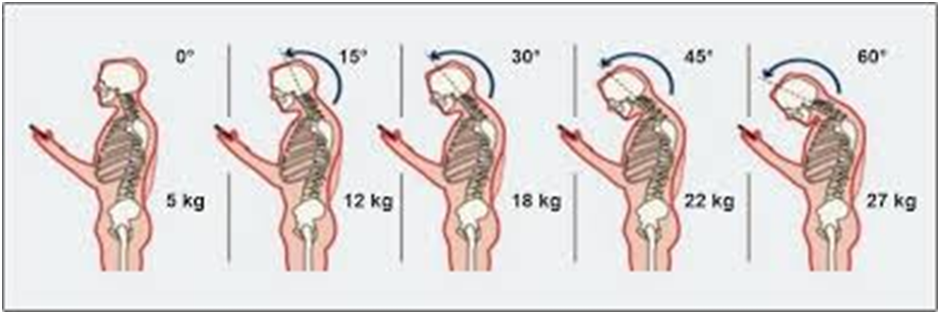
The further you bend your head, the more load builds up on your neck
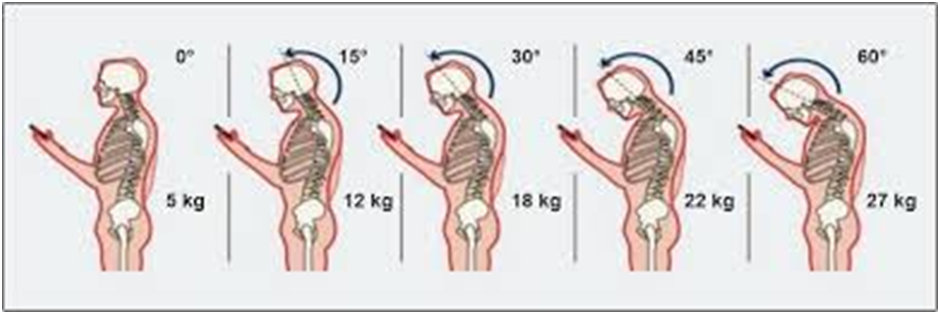
The more you bend your head forward, the greater the load on your neck, and fatigue builds up quickly in the neck muscles. Holding one posture for more than 30 minutes increases fatigue sharply, so you need the habit of stretching out your neck, shoulders and back from time to time.
However, when straightening their neck, many people leave their shoulders and back where they are (a round-shoulder posture) and only tilt their head slightly back, ending up in a turtle-neck posture. If this continues, fatigue accumulates in the neck and shoulder muscles and the joints stiffen, so what was muscle pain gradually worsens into joint pain.
Why do round shoulders cause pain in the neck, lower back and even shoulders?
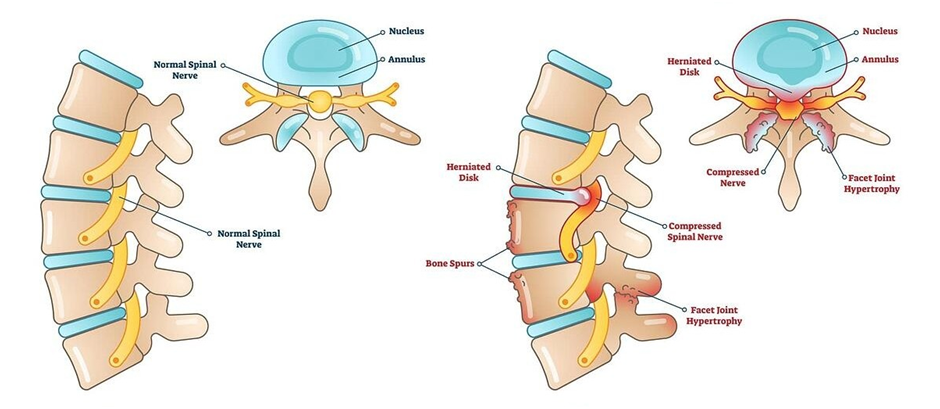
Round shoulders is a posture in which you stand with your shoulders and upper back rolled forward. Because the more your back is bent the more you must tilt your neck and lower back backward to stay balanced, not only do the neck and lower back muscles tire out, but the joints of the cervical and lumbar spine also come under strain.
As this strain builds up, joint conditions can worsen, leading to neck and lower back disorders such as herniated discs and spinal stenosis. A round-shoulder posture also overloads the shoulder joint and becomes a cause of shoulder disorders such as rotator cuff disease and frozen shoulder.
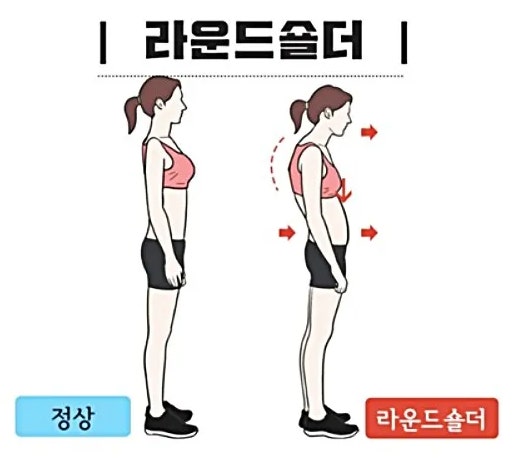
A simple self-check. Stand with your back against a wall or lie flat on the floor and raise your arms overhead. If your elbows do not touch the wall or floor, your shoulders have already stiffened and you need treatment or care.
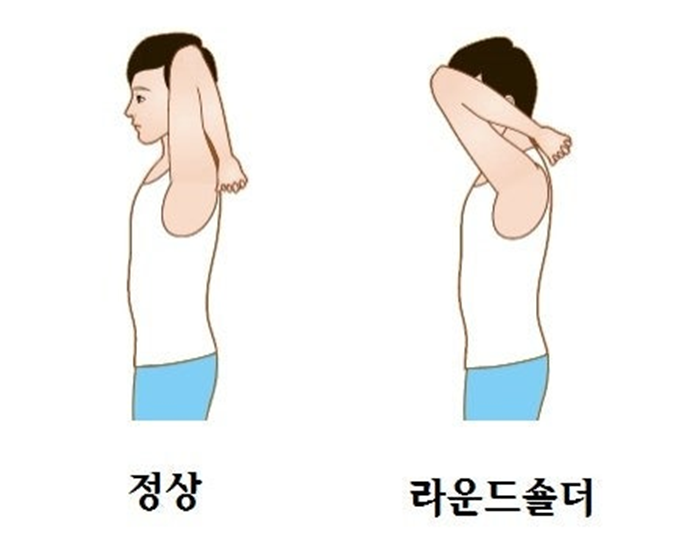
Exercises that help round shoulders
Exercises like the ones below can be done with no equipment, so feel free to repeat them often whenever they come to mind. The key when exercising is not to stop at moving your arms but to make sure your shoulder blades move fully as well.
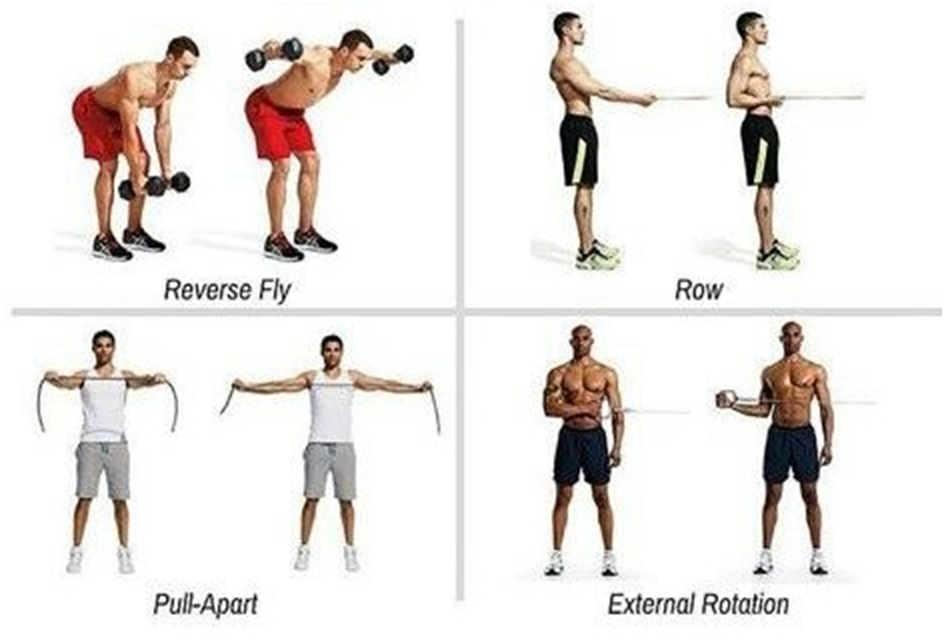
To stress it again, the effect of the exercises depends not on your arms but on how much your shoulder blades move.
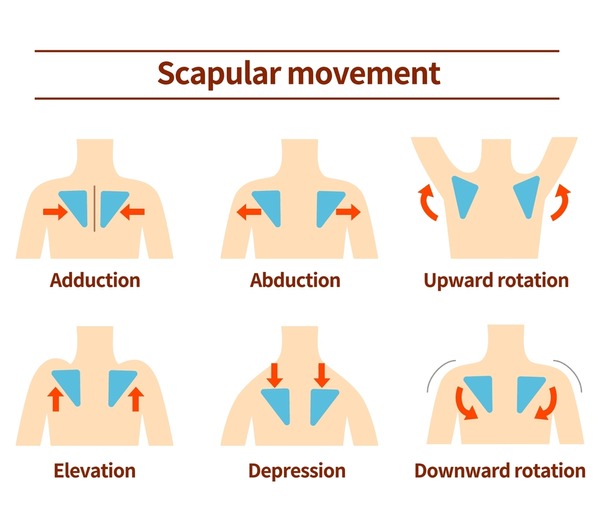
If your shoulder blade movement does not return to normal even after doing the exercises many times, or if pain continues during exercise, it is better to get treatment first. This is because if a joint has already stiffened a lot or developed a problem, starting with exercise and no treatment makes the shoulder joint more likely to be injured further. It is effective to calm pain and inflammation with acupuncture, bring joint movement back close to normal with Chuna treatment, and then continue with exercise.
Anterior pelvic tilt: a hidden cause of lower back and leg problems
Next are cases where problems arise in the lower back or legs because of anterior pelvic tilt, in which the pelvis tilts forward. Some people are born with it, but anterior pelvic tilt often develops from sitting at a desk for long periods and not getting enough exercise. Fortunately, most cases improve with treatment or exercise.
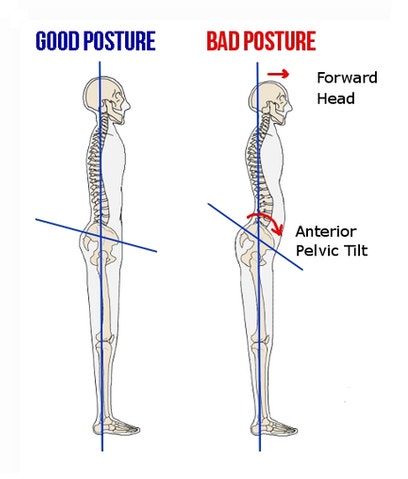
If you have anterior pelvic tilt, you need training that straightens the body while engaging the gluteal muscles, such as squats. If the muscles around the pelvis are fatigued, it is good to do stretching and strengthening exercises together.
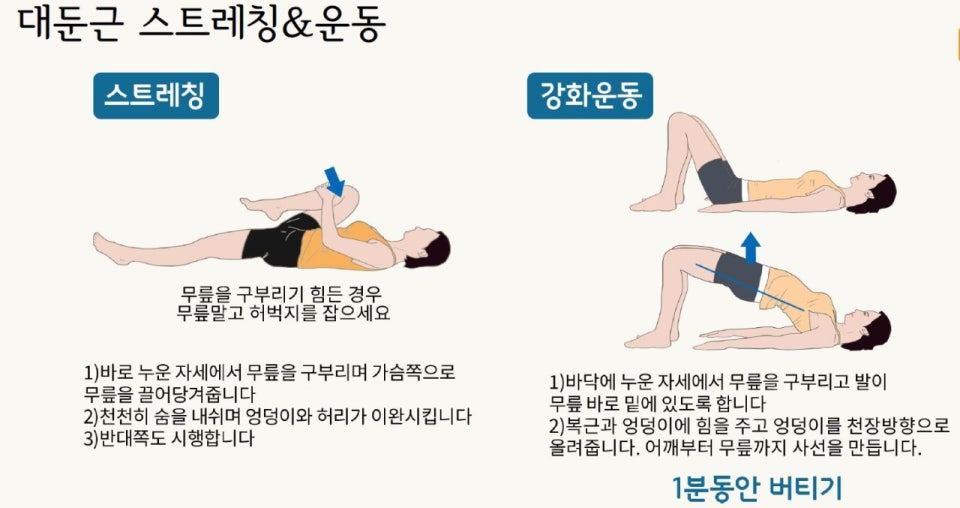
If pain appears during exercise, acupuncture can relax the muscles and reduce inflammation. If the joints are stiff and not improving well, Chuna treatment can help soften the muscles and joints.
Look at your posture, not just the sore spot
If you sit at a desk for a long time or work standing hunched for long periods, your body becomes deformed into postures such as round shoulders and anterior pelvic tilt. That is why you need to make a habit of exercises that straighten your posture from time to time.
Round shoulders and anterior pelvic tilt are closely related to neck, shoulder and lower back pain. If you have this kind of pain, it is good to keep up a steady effort to correct your posture.
When the back and buttock muscles weaken and your posture bends, the neck and lower back take on more strain. Yet most people pay attention only to the sore neck and lower back and overlook the upper back and buttocks, so the pain does not heal well and drags on. Take this opportunity to check your own posture, and if you see a problem, consciously change it to build a pain-free daily life.



Author : Dr. Lee Geun-hyuk, Saeron Korean Medicine Hospital (Korean medicine doctor), Profile Last reviewed : 2026-10-14 This article provides general medical information. Individual diagnosis and treatment plans are decided through an in-person consultation at the hospital.
Start Your Skin Consultation Today
Reach us via KakaoTalk, Naver booking, or call 032-423-3650. Open on Sundays and holidays.