
Manual Therapy in Nonhyeon-dong, Incheon: Tennis Elbow and Golfer's Elbow
Pain on the outer elbow points to tennis elbow, on the inner side to golfer's elbow, and both need treatment, exercise and better habits together
If the outer or inner side of your elbow throbs and even lifting a cup brings on pain, tennis elbow or golfer's elbow is the first thing to consider. Because of their names, both conditions are mistaken for athletes' injuries, but in reality they are far more common in everyday life that involves repeated wrist use, such as childcare, office work, housework and running a small business. Here we go through, in order, what we often explain during consultations in the manual therapy room at Saeron Korean Medicine Hospital in Nonhyeon-dong, Incheon: how the two conditions differ, their causes, where the damage occurs, physical therapy and manual therapy at each stage, and exercises to do at home.
Tennis elbow and golfer's elbow: what is the difference?
Both conditions develop when the tendons attached to the bony bumps of the elbow are overloaded. The difference lies in which muscles are injured and which movements hurt.
Where in the elbow is the damage?
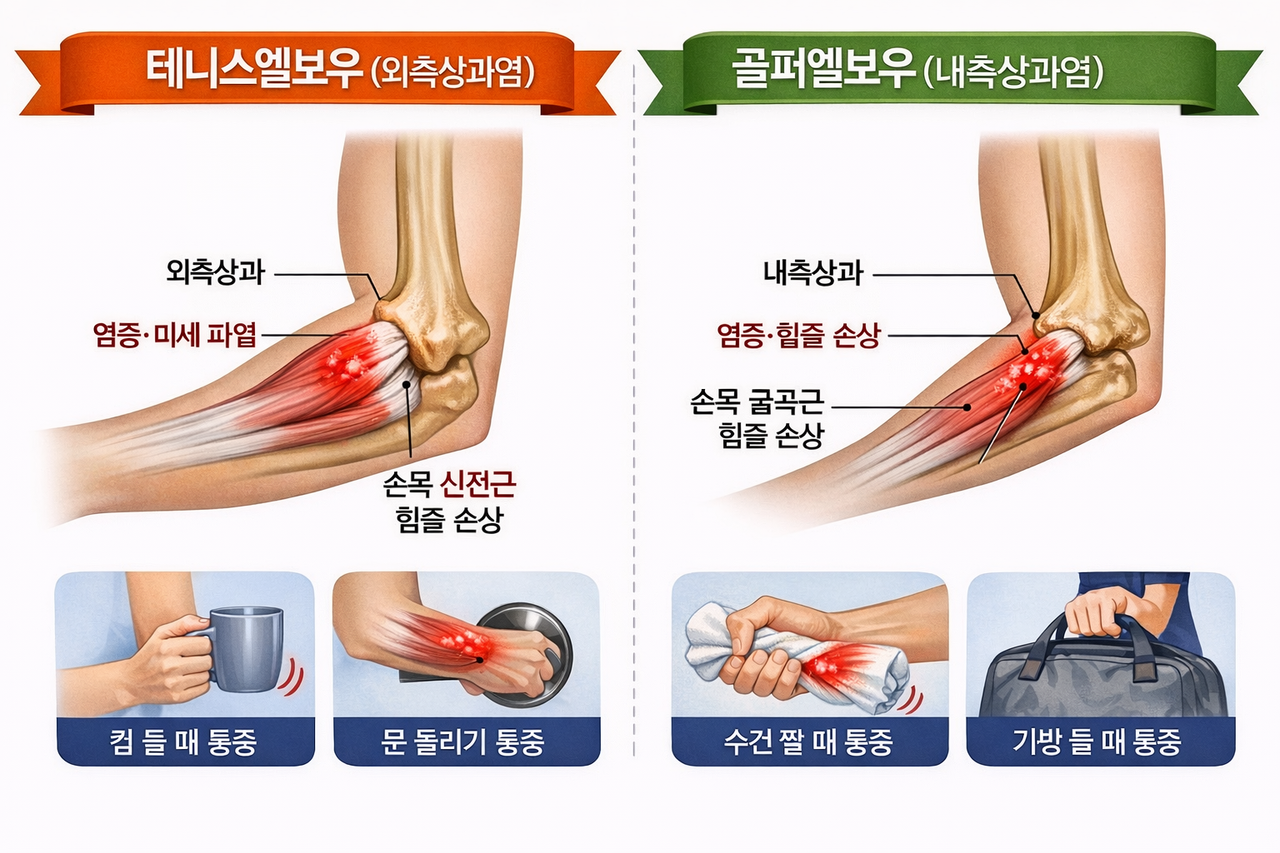
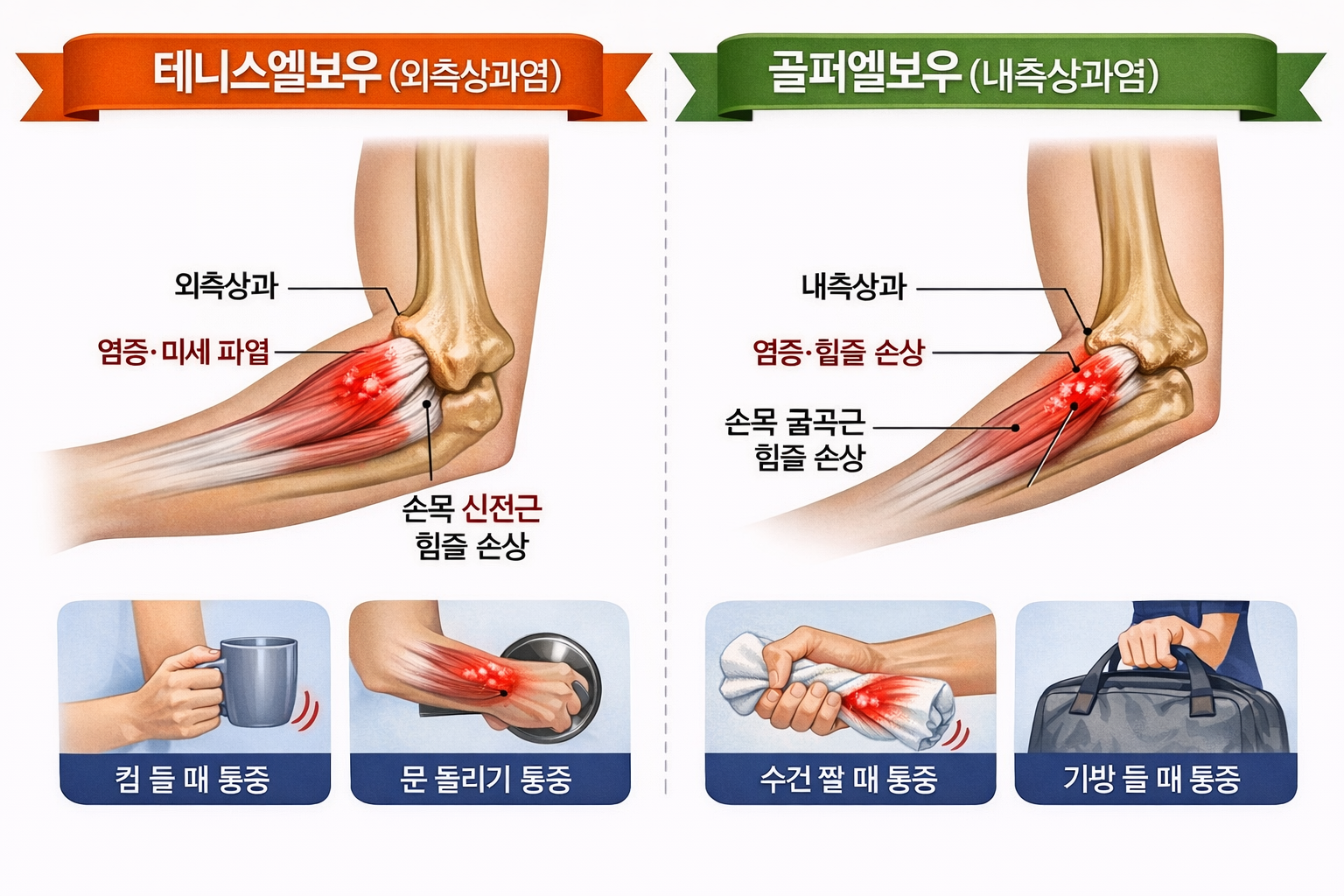
Tennis elbow affects the lateral epicondyle, the bony bump on the outer side of the elbow, while golfer's elbow affects the medial epicondyle, the bump on the inner side. Compare the two spots in the illustration below.
Four habits that injure the elbow
- Repeated wrist use: This includes looking at a smartphone for long periods, working with a keyboard and mouse, or repeatedly lifting heavy loads.
- Using strength the wrong way: This includes lifting things with wrist strength alone instead of using the shoulder, or often bracing with just the hands.
- Muscle imbalance: If the wrist and elbow muscles are weak or the shoulder joint is not stable, the elbow muscles end up overworking to make up for it.
- Exercising without preparation: Repeating arm movements you do not usually make, without warming up, makes tennis elbow and golfer's elbow more likely.
Physical therapy and manual therapy change with the stage
In the acute stage, when the pain has just started, calming inflammation and pain comes first. Cold packs soothe the inflammation, ultrasound therapy delivers stimulation to deep tissue, and electrical therapy eases pain. A brace is sometimes used to protect the tendon and reduce strain, but as a rule a brace is not something to wear all the time; it should be used only for the period it is needed.
In the chronic stage, when the pain has lasted a long time, treatment centers on manual therapy, extracorporeal shockwave therapy (ESWT), stretching and strengthening exercises. At this stage rest alone tends to slow recovery, so at Saeron Korean Medicine Hospital in Nonhyeon-dong, Incheon we also plan manual therapy and exercise together.
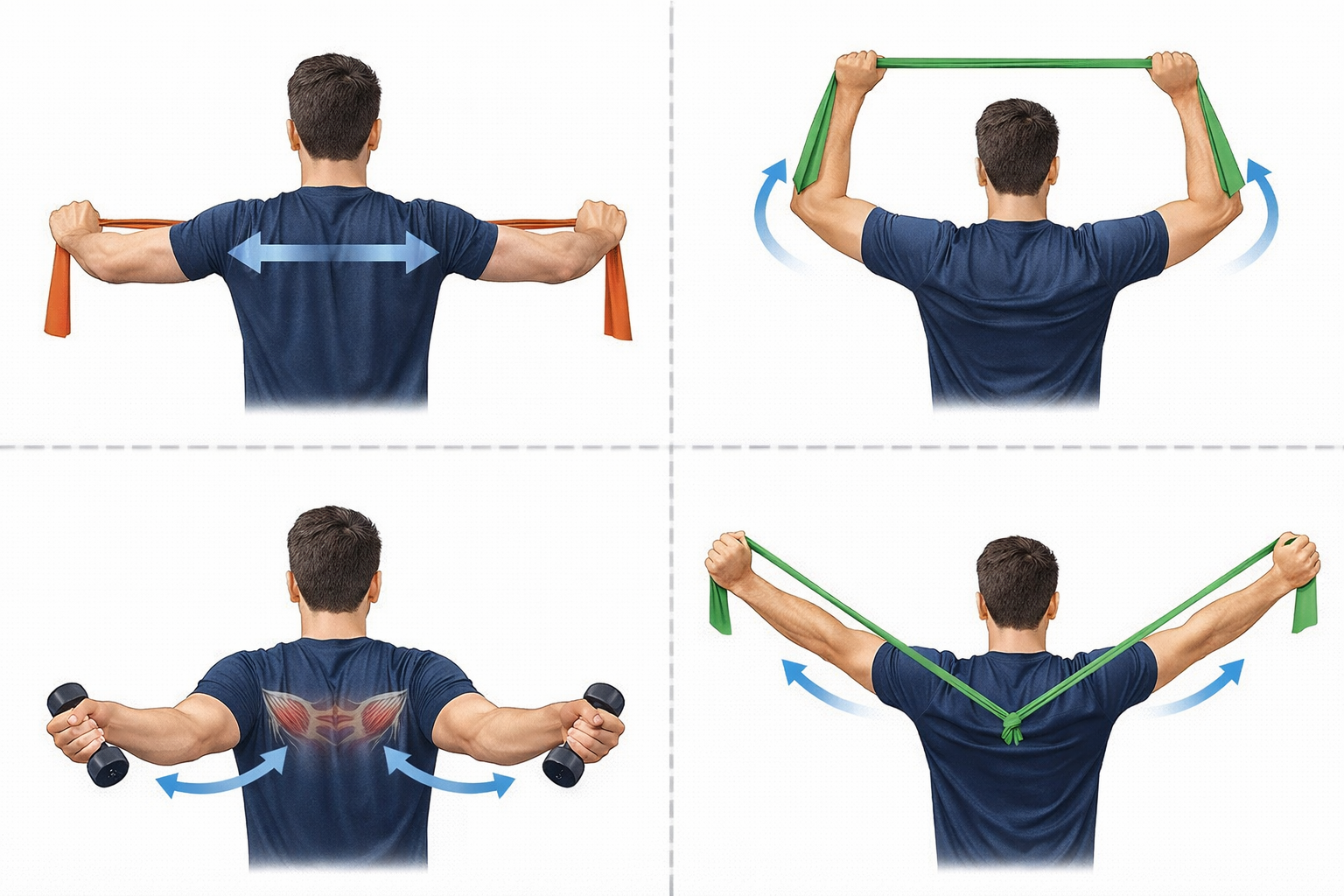
Stretching and strengthening exercises to follow at home
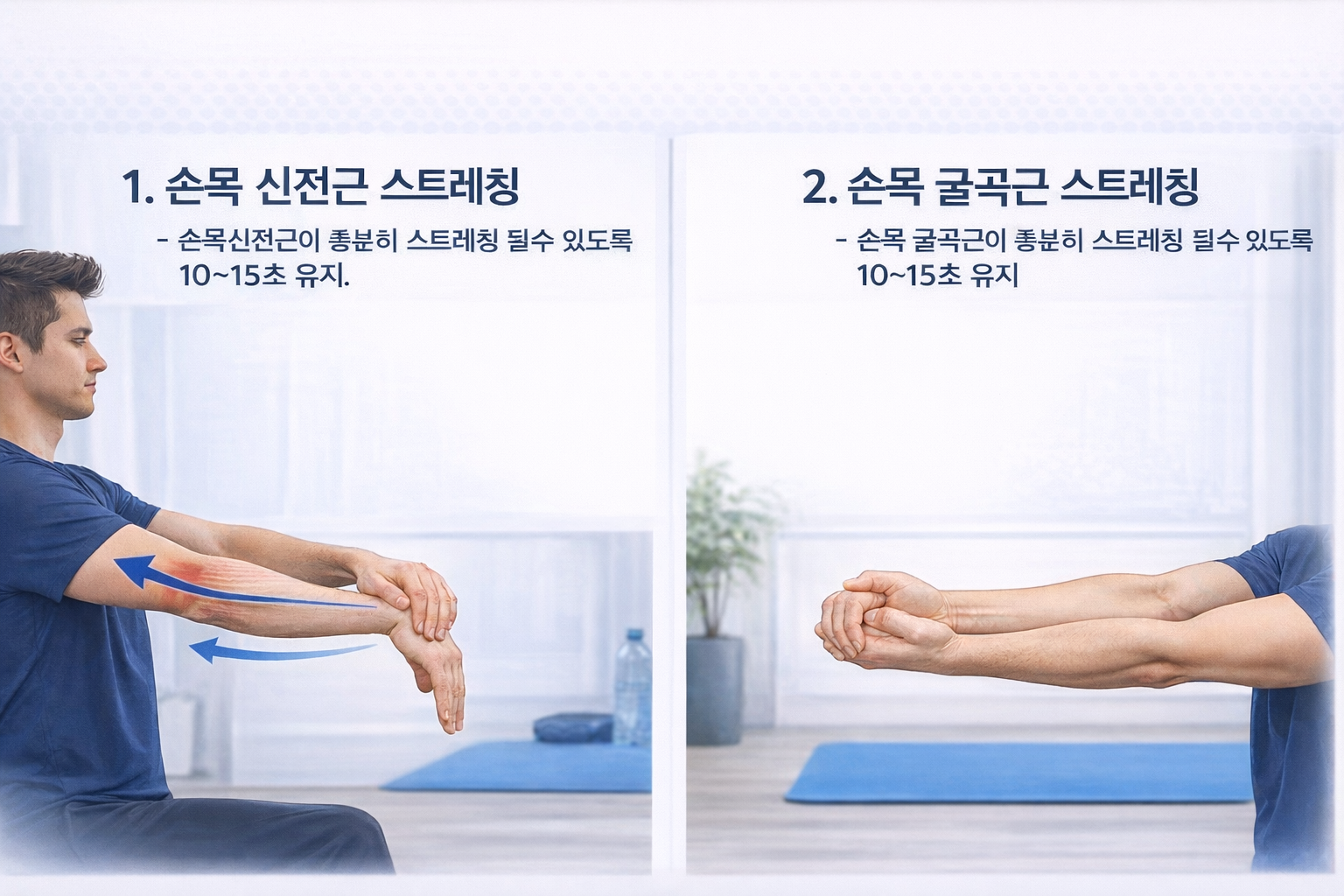
The exercises are divided into three steps. The first step is stretching to lengthen stiff arm muscles.
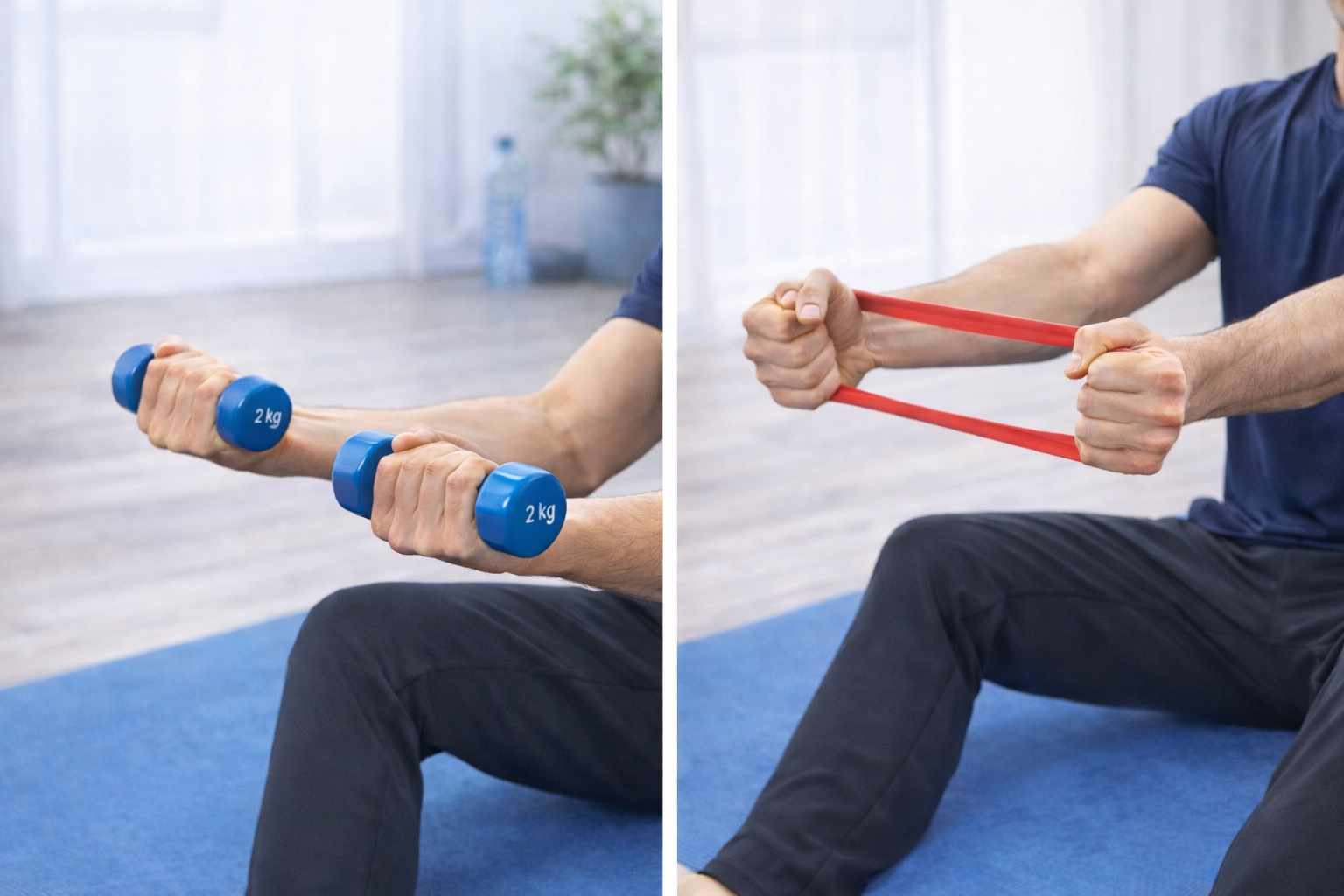
The second is wrist strengthening exercises that train the muscles around the wrist.
The last is shoulder strengthening exercises so the shoulder can share the load the elbow has been carrying.
Summary
- Tennis elbow is a problem in the tendons on the outer side of the elbow, and golfer's elbow on the inner side.
- Both tennis elbow and golfer's elbow develop when poor usage habits and lack of muscle strength overlap.
- Rest alone is not enough; treatment such as manual therapy should continue together with exercise and habit correction.

Last reviewed : 2026-10-14 This article provides general medical information. Individual diagnosis and treatment plans are decided through an in-person consultation at the hospital.
Start Your Skin Consultation Today
Reach us via KakaoTalk, Naver booking, or call 032-423-3650. Open on Sundays and holidays.