
Chuna Therapy for Misaligned Joints
Even after the pain eases, a joint can stay stiff and out of line, so restoring alignment matters
Less pain does not mean a joint has fully healed. If the pain has settled after a joint or ligament injury but the area still feels stiff, does not move well, or your posture somehow feels off, the joint may have stiffened in a misaligned position during recovery. In such cases, acupuncture and Chuna treatment can be used. Dr. Lee Geun-hyuk of Korean Medicine Department 1 at Saeron Korean Medicine Hospital explains the deformity and loss of mobility that follow joint injuries, and how Chuna therapy corrects misaligned joints.
Why does an injured joint stiffen out of alignment?
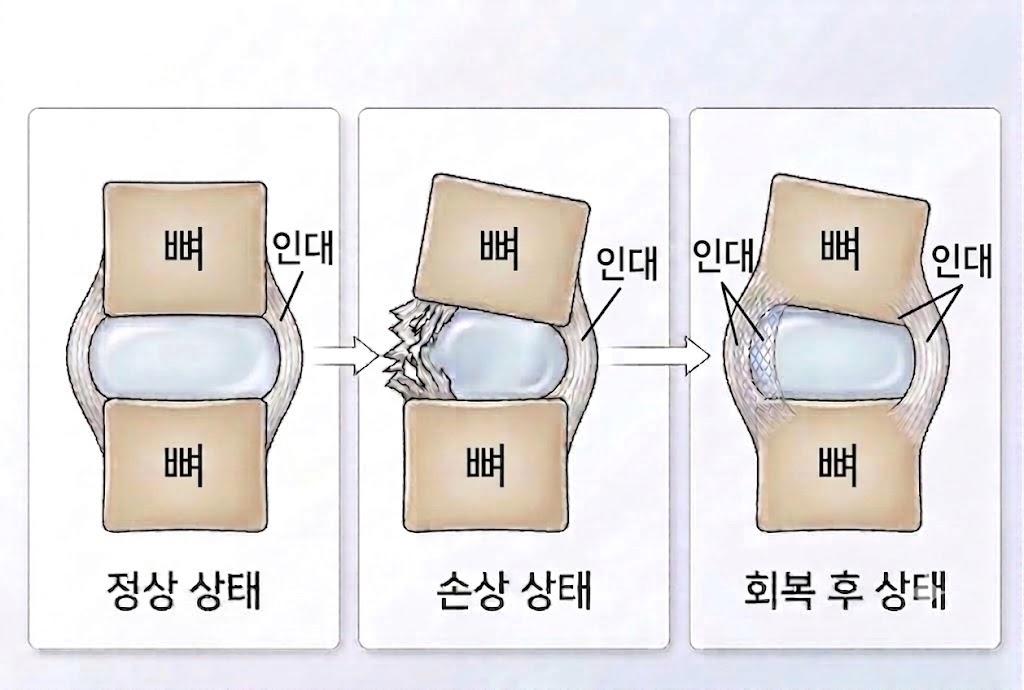
After an injury, joints and ligaments regenerate ligament tissue to protect and heal themselves. The problem arises during this very recovery process. Let's follow the three stages in the illustration below.
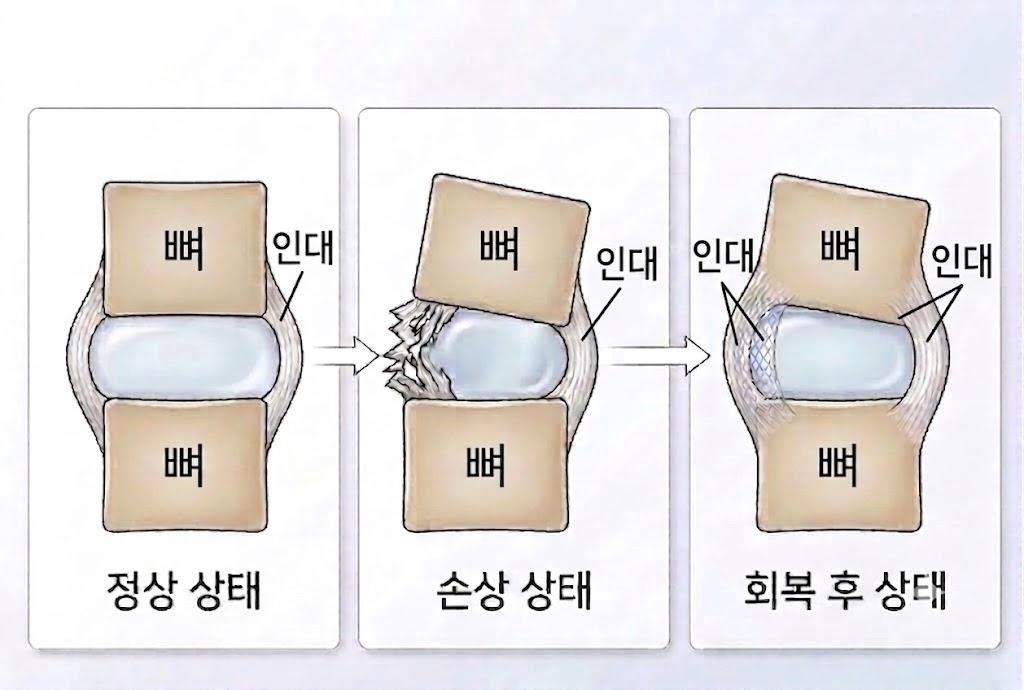
Normal state: The ligaments and muscles on both sides of the bone hold it firmly in place. When the upper and lower bones are lined up correctly, body weight is spread evenly and the joint moves smoothly without pain.
Injured state: When a hunched posture continues for a long time, or when an impact occurs such as a traffic accident or a sports injury, the spinal bones tilt to one side and become misaligned. Pressure builds on the discs and ligaments on the tilted side, and when the ligaments cannot withstand it, they tear microscopically, causing severe pain and inflammation in the surrounding tissue.
After recovery: As the damaged ligaments reattach, fibrosis occurs, in which they become thicker and stiffer than before, along with adhesions to the surrounding tissue. When the stiffened ligaments and muscles pull the bone to one side, the bone becomes fixed in its misaligned position. If a joint segment stiffens out of place, its normal range of motion is lost and the load shifts to other neighboring joints.
What happens if a misaligned joint is left as it is?
If an injured joint is left untreated, the misaligned structure can set in place and worsen into chronic pain or joint disease. Even if the pain has eased, it is a good idea to have your joint alignment checked if stiffness and limited movement remain.
How does Chuna therapy correct joints?
Chuna therapy (推拿療法) is a treatment in which a Korean medicine doctor uses their hands or assistive tools to push and pull misaligned bones and joints back into the correct position. There are three changes expected from Chuna.
- Restoring joint alignment and mobility: Moving the misaligned joint back into place to regain range of motion.
- Distributing load and preventing recurrence: When the bones return to their proper position, the pressure that was concentrated on one part of the joint is reduced.
- Supporting natural healing: As the twisting is released, blood circulation improves, creating an environment in which damaged ligaments and surrounding tissue can recover on their own.
Acupuncture, pharmacopuncture and herbal medicine alongside Chuna
Using Chuna therapy to balance the structure of the spine and joints, together with acupuncture and pharmacopuncture to help stiff joints and ligaments recover and herbal medicine to help strengthen ligaments, muscles and joints, may help you get out of pain sooner.
Summary
- During recovery, joints and ligaments can stiffen out of alignment due to fibrosis and adhesions.
- Chuna therapy corrects the alignment of misaligned joints, restoring mobility and spreading pressure evenly.
- Planning acupuncture, pharmacopuncture and herbal medicine together may help joint recovery.
Author : Dr. Lee Geun-hyuk (Korean medicine doctor), Saeron Korean Medicine Hospital, Profile Last reviewed : 2026-10-14 This article provides general medical information. Individual diagnosis and treatment plans are decided through an in-person consultation.
Start Your Skin Consultation Today
Reach us via KakaoTalk, Naver booking, or call 032-423-3650. Open on Sundays and holidays.