
Lentigo Removal — Causes, Laser Treatment, Preventing Recurrence
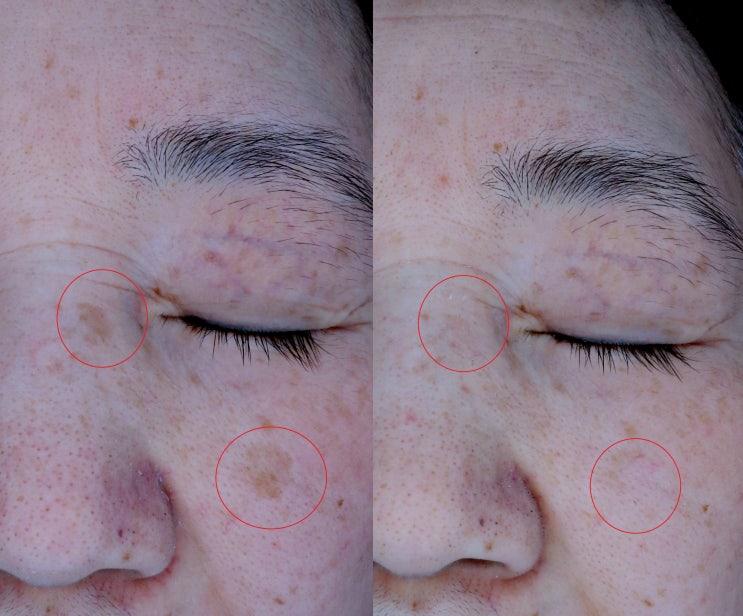
Lentigo is a brown or black pigmented spot on the skin with a clear border. It appears readily where sun exposure is high — the face, neck, and backs of the hands — and hormonal change, heredity, and aging play a part too.
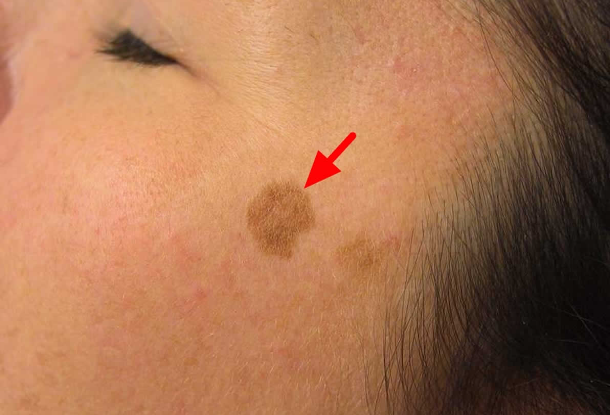
If melasma and lentigo are hard to tell apart
Melasma spreads broadly and hazily, symmetrically across the cheeks and forehead, while lentigo is sharp and individual. Melasma comes from the combined influence of hormones and UV; for lentigo, UV is the largest cause.
Treatment and retouching
After identifying the lesion with analyzer imaging, a 532 nm laser destroys the pigment. Large or deep lentigo may not clear in one pass, so a retouch follows two to four weeks later. One to three sessions with a pico laser or Q-switched Nd:YAG, with three months between sessions to let the skin recover. Once formed, lentigo does not disappear on its own, and left alone it can progress into a raised age spot — so do not put it off.
Half of it is the aftercare
Remove the DuoDERM after two weeks (washing and showering are fine while it is on), and if a red mark remains, apply repair cream. To prevent pigmentation and recurrence, we also recommend steady regenerative pharmacopuncture within the first month after treatment. Day to day, the basics are sunscreen 30 minutes before going out, moisturizing, and food rich in vitamin C.